
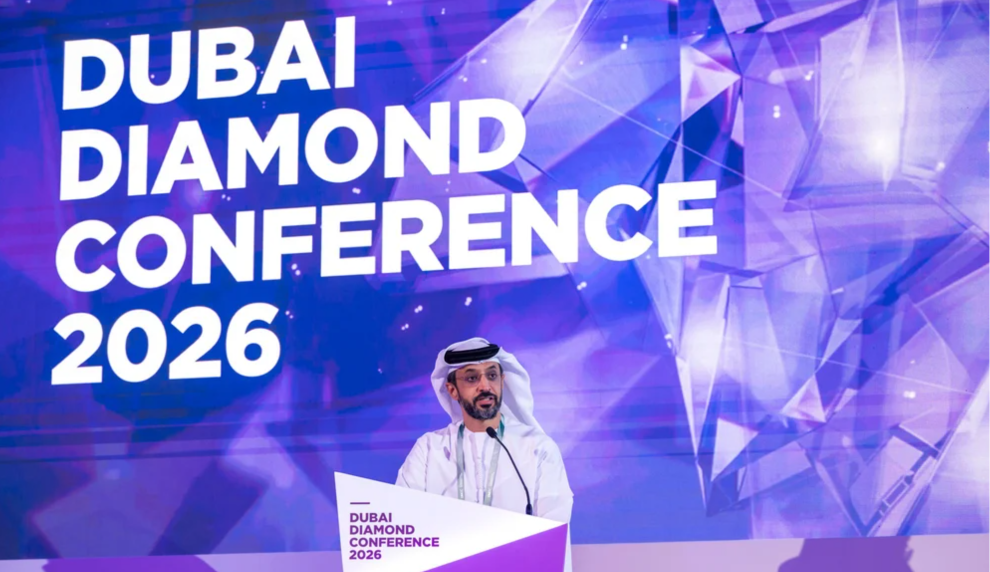
Two minutes before Ahmed Bin Sulayem (Chairman of DMCC) walked on stage in front of a packed audience at the Dubai Diamond Conference, he was messaging me articles and information he thought I would appreciate.
Think about that for a moment. He was about to address an international gathering of leaders in one of the world’s most consequential diamond markets. Yet, in those final moments, he was still making time to share something with me.
That exchange captures a quality I have come to appreciate about Ahmed: his generosity with his time.
He has consistently been gracious with his responses, thoughtful with his invitations, and remarkably responsive despite the extraordinary demands on his schedule.
I believe he is the most generous person I know, and it has nothing to do with how much money he gives away. It has everything to do with the attention and consideration he gives to other people.
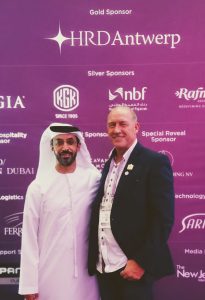
Chairman Ahmed and Stephen Meade
I don’t proclaim this lightly and without evidence.
Over the decades, I have been fortunate to speak at, participate in, or attend some of the world’s most prominent gatherings, including Davos, TED, Milken Global, Bloomberg events, the Qatar Economic Forum, SALT, COP, and many others. Along the way, I have met and developed relationships and friendships with some of the most accomplished and remarkable people in the world. Among them, Chairman Ahmed stands out. Despite the extraordinary breadth of his activities and responsibilities, he has consistently been the most generous with his time.
The Scale of What He Leads
To understand why those two minutes mean so much, it helps to understand the size and breadth of Ahmed’s responsibilities.
As Executive Chairman and CEO of the Dubai Multi Commodities Centre, or DMCC, he leads an organization that has helped transform Dubai into a major international center for trade, investment, and business. According to DMCC, its community grew from 28 member companies in 2003 to more than 26,000 from over 180 countries by 2025, employing more than 90,000 people.
In 2025 alone, DMCC welcomed more than 2,300 new companies. Its activities span over 1,000 licensed business activities and connect entrepreneurs, established corporations, investors, and specialists across industries.
The range is striking. DMCC’s ecosystem includes gold, diamonds, precious stones, energy, coffee, tea, financial services, technology, digital assets, gaming, and real estate. It supports the physical movement of commodities, the financing behind transactions, and the communities that make business possible.
Ahmed also chairs the Dubai Diamond Exchange and the Dubai Gold & Commodities Exchange. Each operates in a complex international marketplace where trade, trust, regulation, and relationships matter every day.
Building Dubai’s Future, One Ecosystem at a Time
What interests me most is the way Ahmed and his team connect established industries with emerging opportunities. DMCC’s strategy is to bring commodities, finance, and technology together, creating the conditions for businesses in different sectors to find one another and grow.
Technology has become DMCC’s largest sector, with more than 4,000 companies. Its specialized communities include the DMCC AI Centre, Crypto Centre, and Gaming Centre. DMCC has also developed finance and wealth initiatives, alongside structures for holding companies and, more recently, foundations.
That breadth reflects a larger objective: strengthening Dubai’s position as a place where entrepreneurs can build, investors can deploy capital, and international companies can connect with markets across the world.
In its 2025 annual report, Ahmed set out an ambition to double DMCC’s membership in the years ahead.
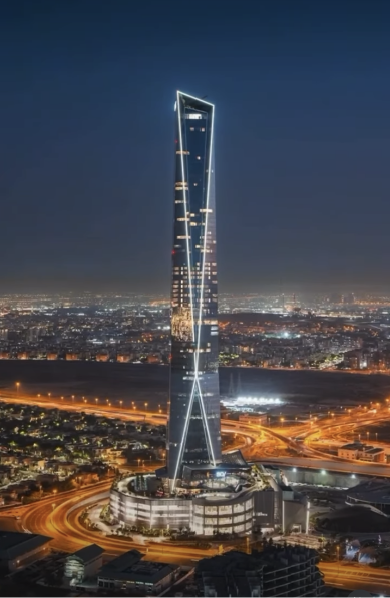
SO Uptown-DMCC Tower
The vision is visible in the physical environment as well. DMCC developed Almas Tower in Jumeirah Lakes Towers, then expanded its district-building ambitions with Uptown Dubai. The 340-meter Uptown Tower brings offices, residences, dining, and the SO/ Uptown Dubai hotel together in one development.
The Dubai Diamond Conference took place at SO/ Uptown Dubai, inside that tower. DMCC is continuing to expand the district with two additional commercial towers and has announced plans for a tower exceeding 600 meters. The scale is impressive, but what matters just as much is the intention: to create places where people and businesses can connect.
An Ecosystem Designed to Help Members Grow
What makes DMCC particularly interesting to me is that it operates as more than a place to register a company or rent an office.
Its greater potential comes from the way it brings people, industries, services, and opportunities together within a connected business community.
A company may arrive in Dubai with an idea, a product, or a service. To turn that opportunity into a sustainable business, it may also need customers, suppliers, professional advisers, financing, specialized facilities, and relationships in other markets. DMCC’s ecosystem is designed to make those connections more accessible.
Its industry-specific communities bring together participants across the value chain. In precious metals and diamonds, that can include traders, suppliers, financiers, and related service providers. In coffee and tea, specialized facilities support activities such as processing and storage. In technology, the AI, crypto, and gaming communities offer spaces and opportunities for people with different expertise to meet and collaborate.
DMCC also supports its members through professional events, industry clubs, exhibitions, and educational programs. Its AI Centre, for example, describes mentorship, seminars, and hackathons delivered through partnerships, as well as networking across its technology communities. These activities can help a founder learn from experienced operators, meet potential collaborators, and gain exposure to ideas beyond the company’s own industry.
The connections can also cross sectors. A technology company developing tools for traceability might meet participants in commodities; an entrepreneur building a business may encounter advisers or sources of capital through the wider community. These are examples of the kinds of connections an ecosystem can make possible, not guarantees of a particular commercial outcome.
This is a principle I have long appreciated in building businesses and communities: individual companies become stronger when they can connect with complementary capabilities. A vibrant ecosystem gives members more than an address. It creates opportunities to exchange knowledge, form relationships, and pursue growth together.
That approach is consistent with the leadership I have observed in Ahmed. The organization he leads is built around connecting people and enabling opportunity, while his personal generosity with his time reflects that same regard for relationships on an individual level.
A New Foundation for Wealth and Generational Continuity
One of DMCC’s most significant recent additions shows how broadly Ahmed and his team think about the needs of the business community. In September 2026, DMCC formally established its Foundations Regulations, adding a new structure for individuals, families, entrepreneurs, and private wealth clients.
The word “foundation” can be confusing, especially to those accustomed to hearing it used for a charitable organization that awards grants. A DMCC Foundation is designed primarily as a private wealth and asset-holding structure. Its purpose is to help organize ownership, governance, succession, and the long-term transition of assets, rather than assuming that every foundation is a grant-making charity.
This distinction matters because across the UAE different foundation regimes have different rules and may permit different purposes. The DMCC framework is specifically aimed at private wealth and continuity. Whether any nonprofit activity is permitted depends on the applicable regulations and the relevant authority’s direction; the name alone does not establish charitable status.
Under DMCC’s framework, a foundation is a legal entity separate from its founder and beneficiaries. It can hold and manage assets in accordance with its stated objectives and governance arrangements. Its governing provisions can address beneficiaries, distributions, decision-making, and certain powers that may be reserved to the founder or another designated person.
Consider an entrepreneur who has spent decades building a group of businesses. Beyond growing those companies, the entrepreneur may want a clear plan for how ownership is held, who makes important decisions, and how family members benefit over time. A properly structured foundation can provide a vehicle for establishing that framework and supporting continuity across generations.
A foundation can work alongside a family office, but it is not the same thing. A foundation is the legal entity that can hold assets and operate under its governing arrangements; a family office can provide or coordinate management and administrative services for a family’s affairs. Depending on the circumstances, the two may complement each other as part of a broader wealth plan.
Within Dubai’s wider infrastructure, structures like these sit alongside financial institutions, professional advisers, investment businesses, and other UAE foundation regimes. For international families and business owners, that adds another option for organizing long-term ownership and succession from a city that has become a major center for global business and private capital.
For DMCC, the foundation offering connects with structures it already provides, including special purpose vehicles and holding companies, as well as the DMCC Wealth Hub and FinX. Together, these can provide different pieces of a broader ecosystem: a place to establish and grow a business, connect with professional and financial communities, and consider how the value created can be organized for the long term.
The right structure will depend on the assets, family circumstances, applicable laws, and professional advice. DMCC’s September announcement said it was completing its rollout and onboarding process, so anyone interested should confirm current availability and requirements directly with DMCC.
To me, this addition reflects the same larger vision visible throughout DMCC: support people not only as they build enterprises, but also as they think about what happens to those enterprises, their assets, and their families in the years that follow.
Diamonds, Gold, and the Next Generation of Technology
Ahmed’s work in diamonds shows how a traditional industry can also become a platform for innovation.
The Dubai Diamond Exchange, which he chairs, hosted 103 precious-stone tenders and auctions in 2025. According to Dubai Customs data reported by the Dubai Media Office, Dubai’s total diamond trade reached a record $41.7 billion that year.
His involvement extends to the rules and relationships that support the trade. He led the UAE’s Kimberley Process Chairmanship in 2016 and 2024, and served as its Custodian Chair in 2025.
The international initiative brings governments, industry, and civil society together to address the trade in conflict diamonds.
At the 2026 Dubai Diamond Conference, the industry gathered to consider a strategic reset for natural diamonds. Discussions addressed the challenges and opportunities facing producers, traders, and the wider market. It was a reminder that leadership often means bringing people together to confront difficult questions before consensus is easy.
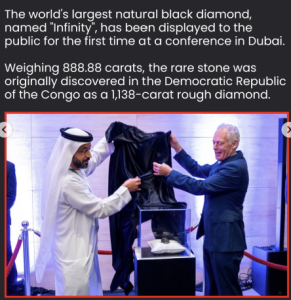
Unveiled at Dubai Diamond Conference 2026
At the same time, DMCC is looking beyond diamonds as gemstones. In 2026, it established a separate lab-grown diamond vertical, identifying potential applications in semiconductors, diamond wafers, quantum technologies, and other advanced industries.
In a recent essay, Ahmed explored how specially engineered synthetic diamonds can be used in quantum research, including sensing and computing. These applications are developing at different speeds, and he cautioned against overselling the technology. What is already clear is the value of connecting materials expertise with the people building the next generation of technology.
The Value of Being Available
Consider what all of this requires: overseeing a global business district, supporting trade in multiple industries, chairing exchanges, building communities, pursuing new technologies, hosting conferences, and engaging with leaders around the world.
It would be easy for someone with those responsibilities to become inaccessible. Most people would understand if every communication passed through layers of assistants, or if a response took weeks. Yet that has not been my experience with Ahmed.
He responds. He shares articles and ideas. He extends invitations. And from what I have observed, I am far from the only person who receives that consideration.
The value of those gestures is not measured by how long they take. A short message can open a door, offer encouragement, share an insight, or simply let someone know they matter. Those moments become even more meaningful when they come from someone whose attention is in constant demand.
That is why the exchange before the conference stayed with me. It was not a grand public gesture. It was a small, personal act at a moment when he had every reason to be focused on something else.
Time Is a Form of Generosity
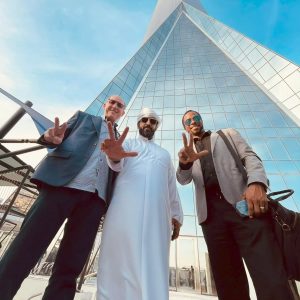
Stephen Meade- Chairman Ahmed- Kevin Richards- Uptown DMCC
We often define generosity by the size of a donation or the amount of money someone is willing to give.
Financial generosity can change lives, and it deserves recognition. But it is only one way to make a difference.
-Money can be earned, invested, and created.
-Time is finite.
-Once a moment is spent, it cannot be recovered.
That makes the choice to give someone your attention deeply personal. It says, in effect, that even amid competing priorities, this person and this interaction are worth a portion of your day.
For leaders, there is a lesson here. Being available does not mean answering every message immediately or allowing every request to dictate your calendar. It means recognizing that responsiveness, thoughtfulness, and a willingness to share can have an impact far beyond the minutes involved.
The strongest communities are built through countless acts of consideration. They grow when people share an opportunity, make an introduction, offer an idea, or simply take the time to respond. Those choices build trust, and trust creates relationships that can endure long after any single transaction.
Ahmed Bin Sulayem’s accomplishments are visible in companies, exchanges, conferences, and towers across Dubai. His generosity is visible in the moments he gives to others along the way.
Two minutes before taking the stage, he made time. For me, that says as much about the man as any building, title, or business achievement ever could.
How might our businesses and communities change if we measured generosity not only by what we give, but also by the time and attention we make available to others?
Stephen Meade
aka: The BullsEye Guy


